
-
×
 Coco Peat Block (5 KG, 50L-70L)
1 × ₨1,500.00
Coco Peat Block (5 KG, 50L-70L)
1 × ₨1,500.00


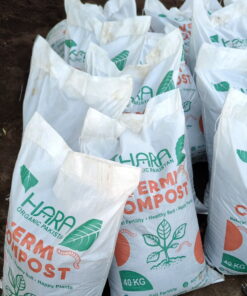
Vermicompost (40 KG, Hara Organics)

Hara Organics Vermicompost (40KG) — a premium, 100% natural fertilizer made from banana peels, dried leaves, and straw, processed using Red Wiggler (Eisenia Fetida) earthworms. Pakistan’s most trusted organic fertilizer for healthier soil, stronger roots, and higher yields. Ideal for kitchen gardening, nurseries, pots, orchards, and open-field farming.
Application: Mix 5–10 bags per acre (200–400 KG) during soil preparation.
Description
🌿 Hara Organics Vermicompost – Premium 100% Natural & Organic Fertilizer (40KG)
Give your soil the organic boost it deserves with Hara Organics Vermicompost, Pakistan’s leading and most respected organic fertilizer brand. Produced from banana peels, dried leaves, and straw, and expertly composted using Red Wiggler Earthworms (Eisenia Fetida), this vermicompost enriches soil with natural nutrients, beneficial microbes, and long-lasting organic matter.
Perfect for farmers, home gardeners, nursery owners, and commercial growers, Hara Organics Vermicompost improves soil structure, boosts fertility, and supports vigorous plant growth — all without harmful chemicals.
🌾 Why Choose Hara Organics Vermicompost?
✔ Premium Organic Raw Materials
Made from nutrient-rich banana peels and dried tree leaves, providing a natural source of potassium, calcium, and trace minerals.
✔ Processed with Red Wiggler Earthworms
The Eisenia Fetida species converts organic matter into humus-rich vermicompost with high microbial activity.
✔ Improves Soil Health & Structure
Enhances soil texture, water retention, aeration, and microbial diversity — making soil “alive” and fertile.
✔ Strengthens Roots & Boosts Nutrient Uptake
Plants develop stronger root systems and absorb nutrients more efficiently, reducing stress and improving overall plant vigor.
✔ Reduces Chemical Fertilizer Dependency
Regular use leads to better soil fertility, meaning you need fewer chemical inputs and save long-term costs.
✔ Ideal for All Crops & Growing Systems
Great for vegetables, fruit orchards, tunnels, seedlings, pots, greenhouses, ornamental plants, lawns, and large farms.
📌 Recommended Application (By Hara Organics)
During soil preparation:
- Apply 5–10 bags per acre (total 200–400 KG)
- Mix thoroughly in the topsoil before sowing or transplanting
For kitchen gardening or pots:
- Mix 20–30% vermicompost into your potting mix
- Top-dress every 45–60 days for continuous nutrition
🌱 Key Benefits
- Improves soil structure & moisture-holding capacity
- Increases organic matter and soil microbes
- Strengthens roots and enhances nutrient uptake
- Reduces chemical fertilizer requirements
- Improves soil health, fertility, and long-term yields
- Safe, natural, and eco-friendly
🎯 Suitable For
- Vegetable farming
- Fruit orchards
- Tunnel farming
- Nurseries & greenhouses
- Seedlings & potting mixes
- Flower gardens & landscapes
- Home gardens & kitchen gardening
📦 Packaging
- Weight: 40 KG
- Brand: Hara Organics
- Form: Ready-to-use organic vermicompost
Comparison: Hara Organics Vermicompost vs Chemical Fertilizers
| Feature / Aspect | Hara Organics Vermicompost (40KG) | Chemical / Synthetic Fertilizers (NPK, etc.) |
|---|---|---|
| Primary composition | Organic humus produced by Red Wiggler earthworms from banana peels, dried leaves, straw (complex organic matter). | Concentrated mineral salts (N, P, K) and micronutrients in soluble forms. |
| Nutrient release | Slow-release, biological mineralization — nutrients become available over weeks–months as microbes break down organics. | Fast-release; immediately available nutrients (quick response). |
| Soil health impact | Builds soil organic matter, improves structure, water retention, and supports beneficial microbes. | Does not add organic matter; long-term overuse can reduce soil organic content. |
| Microbial activity | Greatly increases soil microbial diversity and beneficial organisms. | Often reduces microbial diversity if overused; no direct benefit to microbes. |
| pH & salinity | Generally neutralizes soil and lowers salinity risk; gentle on roots. | Can increase soil salinity and alter pH if misapplied. |
| Risk of plant burn | Extremely low (safe for seedlings and foliar/root contact). | Higher risk of fertilizer burn if applied at excess rates or near roots. |
| Environmental impact | Low — biodegradable, low runoff pollution risk when used correctly. | Higher risk of leaching/runoff, groundwater contamination and greenhouse gases (nitrous oxide) if misused. |
| Short-term vs long-term benefit | Slower visible response but strong long-term improvement in fertility and structure. | Rapid crop response (greener plants, early growth) but limited long-term soil improvement. |
| Application frequency | Applied at soil prep and as potting/bed amendment; top-dress periodically. (Hara Org. rec: 5–10 bags / acre). | Applied at sowing/transplant and during season as side-dress / fertigation (multiple times). |
| Ease of use | Simple to mix into soil, safe to handle, ideal for beds, pots, tunnels. | Easy to apply but requires care (correct rates, dissolution, timing). |
| Cost profile | Higher upfront per-bag cost vs bulk chemical, but builds soil value & can reduce future input needs. | Lower upfront cost per nutrient unit; recurring expense and may increase over time with yield-driven use. |
| Yield pattern | Improves yield over seasons as soil health improves; stabilizes yields and quality. | Often raises yields immediately; may plateau or require increasing doses over time. |
| Suitability | Best for organic systems, nursery use, home gardens, tunnels, orchards, potting mixes. | Best for immediate nutrient correction, commercial row crops needing fast N/P/K. |
| Storage & shelf life | Stable if kept dry; living microbes retained — long shelf life under good storage. | Stable and shelf-stable; must be kept dry for some formulations. |
| Regulatory / market value | Can be sold as organic input; adds marketing value for organic produce. | Not organic; necessary for conventional production but limits organic labeling. |
Practical Recommendation (How growers typically combine both)
- Soil test first. Always begin with a soil test to identify nutrient gaps and pH issues.
- Baseline application (soil prep): Mix Hara Organics Vermicompost into the soil during preparation — recommended 5–10 bags (200–400 kg) per acre depending on soil condition. For small plots/pots, mix vermicompost at 20–30% of potting medium.
- Use chemical fertilizers selectively: Apply smaller, targeted doses of chemical NPK during critical growth stages (e.g., early vegetative or fruiting), rather than continuous heavy use.
- Reduce synthetic inputs over time: As soil organic matter and microbial activity increase with regular vermicompost use, many growers are able to reduce chemical fertilizer rates (commonly reported ranges: ~20–50%) while maintaining yields — monitor crop response and adjust.
- Integrate, don’t replace (initially): For immediate nutrient needs in an impoverished field, use a combined approach: vermicompost for structure and biology + measured synthetic fertilizer for quick-release nutrients. Over seasons, aim to shift toward higher organic proportions.
- Timing & placement: Apply vermicompost at soil prep or as localized banding near transplants; apply soluble fertilizers as side-dress or through fertigation as required by crop stage.
Additional information
| Weight | 40000 g |
|---|
Reviews (0)
Be the first to review “Vermicompost (40 KG, Hara Organics)”
Related products

Out of stock

Out of stock

Out of stock

Out of stock
Fertilizers & Nutrients
Plant Food All Purpose Soluble Fertilizer By Puccioni, 250 grams (NPK 20:20:20)
₨300.00
Reviews
There are no reviews yet.